
top of page
elvis3.png
bali mynah inset.png

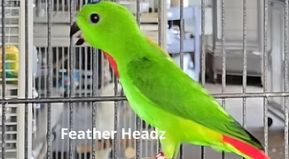
Hanging Parrot Blue Crown

Read More

The Blue-crowned Hanging Parrot (Loriculus galgulus) is a tiny, mostly green parrot from Southeast Asia, famous for its unique ability to sleep, feed, and even shower upside down. Males sport a vibrant blue crown, red throat, and red rump, while females are duller, lacking the prominent red/blue markings, and both sexes are known for their high-pitched squeaks and aerial acrobatics in forests and gardens, often seen in small flocks.

bali mynah inset.png

Philipine Blue Nape

Read More

Philipine Blue Nape (conservation breeding) Locally known in the Philippines as Pikoy, is a medium-sized parrot native to the Philippine archipelago. It is widely recognized as a national treasure and is famously featured on the reverse side of the 500 Philippine peso bill.

bali mynah inset.png

Red Vented Cockatoo

Read More

Red Vented Cockatoo (conservation breeding) Also known as the Philippine Cockatoo or locally as the Katala, is a critically endangered bird endemic to the Philippines.

bali mynah inset.png

Great Billed Parrot

Read More

Great Billed Parrots are a very rare species inside the United States. These are a stunning larger sized bird that is known for its very large red beak. It has a very high pitched call and are decent talkers.

bali mynah inset.png

Bali Mynah

Read More

(Florida Only) The Bali mynah (or Bali starling) is a stunning, small, critically endangered Indonesian bird, almost entirely snow-white with black tips on its wings and tail, distinctive blue skin around its eyes, and a drooping crest, with both sexes looking very similar, making it a cultural icon but incredibly rare in the wild.

Certain species in our care are bred solely for conservation purposes. These birds are exceptionally rare and are not placed in pet homes. Any offspring produced from these pairs are retained and reintegrated into our breeding program to help strengthen and preserve their populations.


We care deeply about our conservation birds and are committed to seeing their numbers grow responsibly and sustainably.


We are often asked whether these birds are released back into the wild. They are not. While reintroduction is not part of our program, conservation breeding plays a critical role in preventing extinction. History has shown that many species have been saved because dedicated breeders maintained nearly extinct birds within carefully managed private collections.


We are open to collaborating with other ethical breeders who work with these rare species to ensure unrelated genetic lines and long-term viability.


When you purchase one of our companion birds, a significant portion of those funds is reinvested into our conservation program. This support helps us continue the work of maintaining, breeding, and protecting species that may otherwise disappear.


Through responsible breeding, collaboration, and reinvestment, we are doing our part to help ensure these rare birds remain a part of our world—now and for generations to come.

Our Conservation Projects:

bottom of page